
History
With more than 10 million media items, Göttingen University Library is one of the largest libraries in Germany. It fulfils a wide range of functions at local, regional, national and international levels.
Founding of the Library
From the very beginning, the founding of the Georg-August University of Göttingen in 1734 and its development into a university of international standing were linked to the systematic development of the Göttingen University Library as an indispensable tool for scholarship. Within the premises of the former Pauliner monastery in Göttingen, founded in 1294, which formed the structural foundation of the entire university building upon the official opening of the Georgia Augusta in 1737, the library was initially allocated a single hall. This housed its initial collection of approximately 12,000 volumes, consisting mainly of the posthumous private library of the Grand Bailiff of Celle, Joachim Hinrich von Bülow (1650–1724).
Münchhausen, Gesner and Heyne
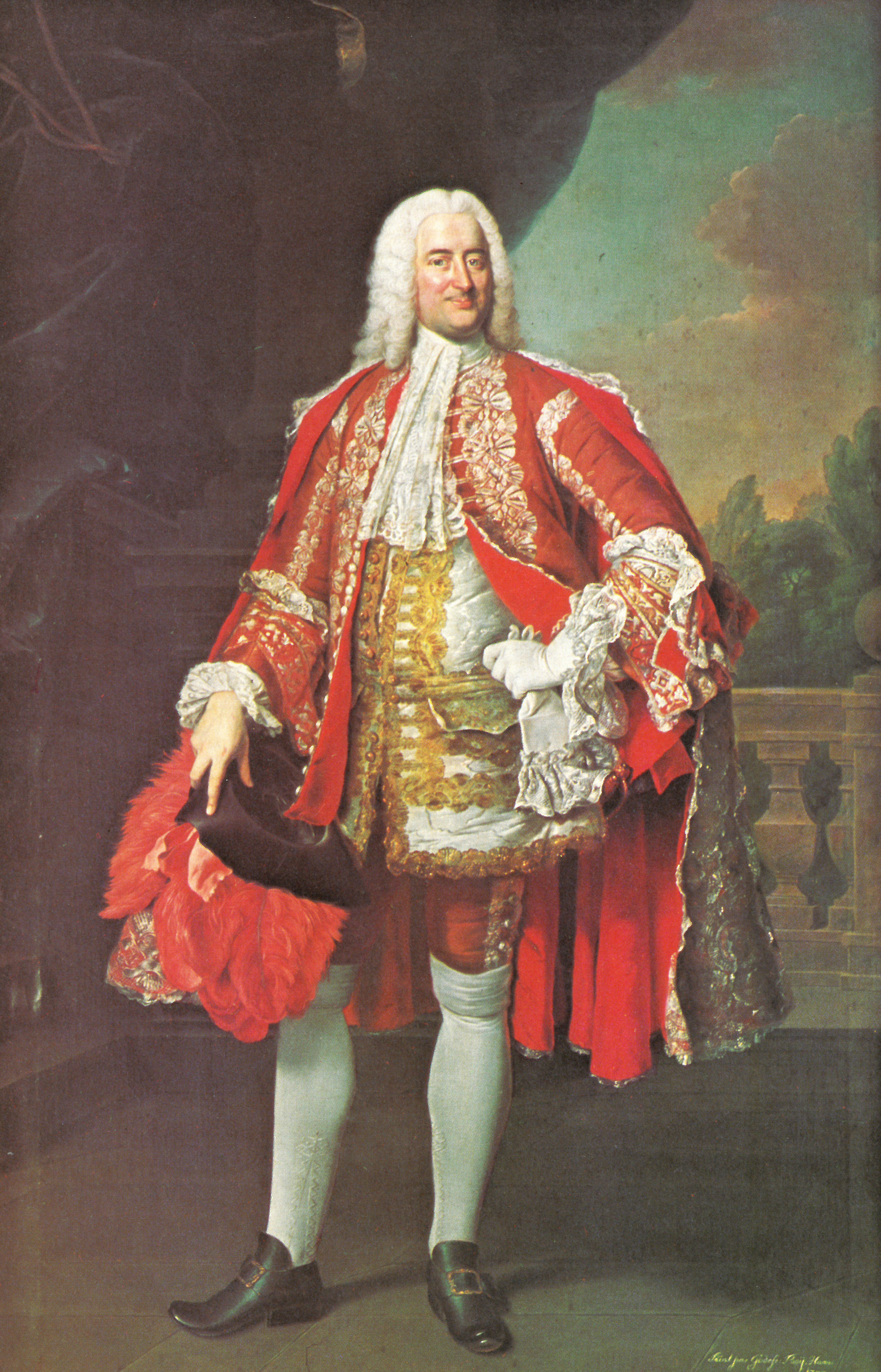
In Gerlach Adolph von Münchhausen (1688–1770), Minister of State and University Curator of Hanover, the library found a generous patron. Under these favourable conditions, the library directors Johann Matthias Gesner (1734–1761) and Christian Gottlob Heyne (1763–1812) – who headed the library for almost 50 years – were able to build up a collection of exceptional depth. Heyne himself described the acquisition principles of the Göttingen University Library in 1810 as ‘the uninterrupted, systematic acquisition of that which … is necessary for a library which is organised not according to a passion for individual subjects, not out of a love of splendour, not for the sake of outward appearance, but according to the essence and scope of the most important writings of all times and peoples in all sciences ...”. Within a few decades, Heyne established a dense network of contacts with foreign booksellers, diplomats and scholars in order to acquire literature from all over the world.
Due to the personal union between Hanover and Great Britain, which lasted until 1837, the Anglo-American cultural sphere was a particular focus of the collection; due to the University of Göttingen’s close ties with Russia, the Slavic world was another; and finally, the natural sciences were also included. Several catalogues catalogued the holdings in an exemplary manner. In addition to the group location catalogue for the Bülow Collection, which was continued as an accession catalogue, an alphabetical catalogue was introduced in 1743 and a systematic catalogue in 1755. All catalogues were interlinked and together formed the Göttingen catalogue system.
The concept of the Göttingen University Library included liberal lending policies, which soon made it possible for students to borrow books as well. Within a few decades, it thus became the first modern universal library of European standing. By 1800, its collection already numbered around 150,000 volumes. The library thus gradually expanded to encompass all parts of the former monastery’s buildings as well as extension buildings. In 1812, following the installation of a false ceiling, the Paulinerkirche, which had previously served as the university church, was also handed over to the library for its use.
Extension Buildings

Following Heyne’s tenure, the Göttingen University Library initially developed at a slower pace, primarily due to funding that was more limited than before. Jacob Grimm (1785–1873), who had been appointed to Göttingen with his brother Wilhelm in 1829 and worked there as a librarian and professor before being expelled from the state in 1837 as one of the Göttingen Seven, drew attention in a 1833 memorandum to the importance of the library and the gaps that had arisen, thereby securing at least a temporary increase in the budget.
With the annexation of the Kingdom of Hanover to Prussia, Göttingen University lost its status as a privileged state university, and its library became one of ten Prussian university libraries. Thanks to its position as the second largest library in northern Germany after the Royal Library in Berlin, it played an important role in the Prussian inter-library loan system. In 1886, the library director Karl Dziatzko (1842–1903) was appointed to the first chair of auxiliary library sciences in the German-speaking world. Shortly before this, between 1878 and 1883, the library had undergone its largest extension, the so-called Prinzenstraße building, which was designed as a three-storey storage facility and connected to the older parts of the library via a linking annex. The final extension to the building complex was the so-called storage building, constructed between 1914 and 1916.
The First World War

After the collection had reached more than 570,000 volumes in 1910, the First World War, with its political and economic consequences, inflation and the global economic crisis, brought the favourable growth of the collection at the beginning of the 20th century to a halt. The Emergency Association for German Science provided significant support in filling the gaps caused by the war. Under the special collection system it developed, the Göttingen University Library was entrusted with maintaining the sections on the Anglo-American cultural sphere and the natural sciences, owing to its particularly comprehensive specialist collections.
Under the library director Richard Fick (1867–1944), the catalogue system was reorganised and adapted to modern requirements with the replacement of the alphabetical volume catalogue by a card catalogue and a subject-headings catalogue, also kept in card form.
The Second World War

A study by the historian Juliane Deinert, published in 2016, describes the extent to which the Nazi authorities intervened in the staffing, user, financial and acquisition policies of Göttingen University Library after 1933. Jewish and politically disaffected employees were persecuted and dismissed from their posts, including the historian and librarian Alfred Hessel (1877–1939). The library’s acquisitions activities during the Nazi era were the subject of the research project ‘Identification and Restitution of Nazi-Looted Property at the Lower Saxony State and University Library of Göttingen’, which identified 1,080 books in the library’s collection as definite or suspected cases of looted property.
In 1944, the library building was largely destroyed by a bomb hit; fortunately, however, the collections themselves suffered only relatively minor damage. As a result, the Göttingen University Library assumed further important functions in inter-regional inter-library loans in the years that followed. In recognition of its achievements in this field, the Lower Saxony State Ministry awarded it the title ‘Lower Saxony State and University Library Göttingen’ (SUB Göttingen) in 1949. In the same year, the German Research Foundation (DFG), which had emerged from the Emergency Association of German Science, reorganised its special collections programme and entrusted the library with the management of further special collections.
Reconstruction and Progress

The post-war period was initially dominated by the reconstruction of the library building. By 1950, the collection had exceeded one million volumes. From 1957 onwards, the Lower Saxony Central Catalogue (NZK) was developed at the Göttingen State and University Library (SUB Göttingen) to manage regional inter-libraryloans.
After the transition to electronic data processing was completed in 1967, initially with the cataloguing of journals, this was followed by the cataloguing of monographs from 1977 onwards. The Lower Saxony Library Computer Centre (BRZN), established in 1982, developed the Lower Saxony Monograph Index (NMN) and the Lower Saxony Journal Index (NZN). With the adoption of the Dutch PICA system in 1993, this evolved into the Joint Library Network (GBV).
Central Library and Divisional Libraries

In 1992, Göttingen University Library (SUB Göttingen) moved into its modern new building, with a total floor area of approximately 22,000 square metres, on the campus of the Centre for the Humanities. The opening of the Central Library in 1993 marked the beginning of a functional separation between what were now the two main buildings of the Göttingen University Library: the Central Library as a modern, universal academic library, and the Historical Building as a centre for in-depth historical research. The renovation of the Historic Building, which began in 2000 and was completed in 2006, made it possible to concentrate the library’s special collections in one place; at the same time, numerous academic and cultural events and exhibitions have been held in the Paulinerkirche ever since.
Parts of the library’s holdings had already moved into their current buildings in 1973 as the Chemistry Departmental Library (closed in 2016) and in 1977 as Medical Library; the Forestry Divisional Library followed in 2000 and the Physics Divisional Library in 2003. In 2008, the library of the seminars and institutes of Economics and Social Sciences was integrated into the SUB Göttingen as Economics and Social Sciences Divisional Library. In 2012, the Cultural Studies Divisional Library was opened in the new building of the Centre for Cultural Studies at the University of Göttingen. It brings together 22 libraries from various departments and institutes of the Faculty of Arts, interdisciplinary centres and the SUB Göttingen. Since its opening in 2013, the SUB Göttingen has also been operating the University of Göttingen’s Learning and Study Centre.